This FAQ helps beginners and hobby crafters choose the right embroidery hoop, keep fabric tight, and decide when a hands-free embroidery hoop stand is useful.
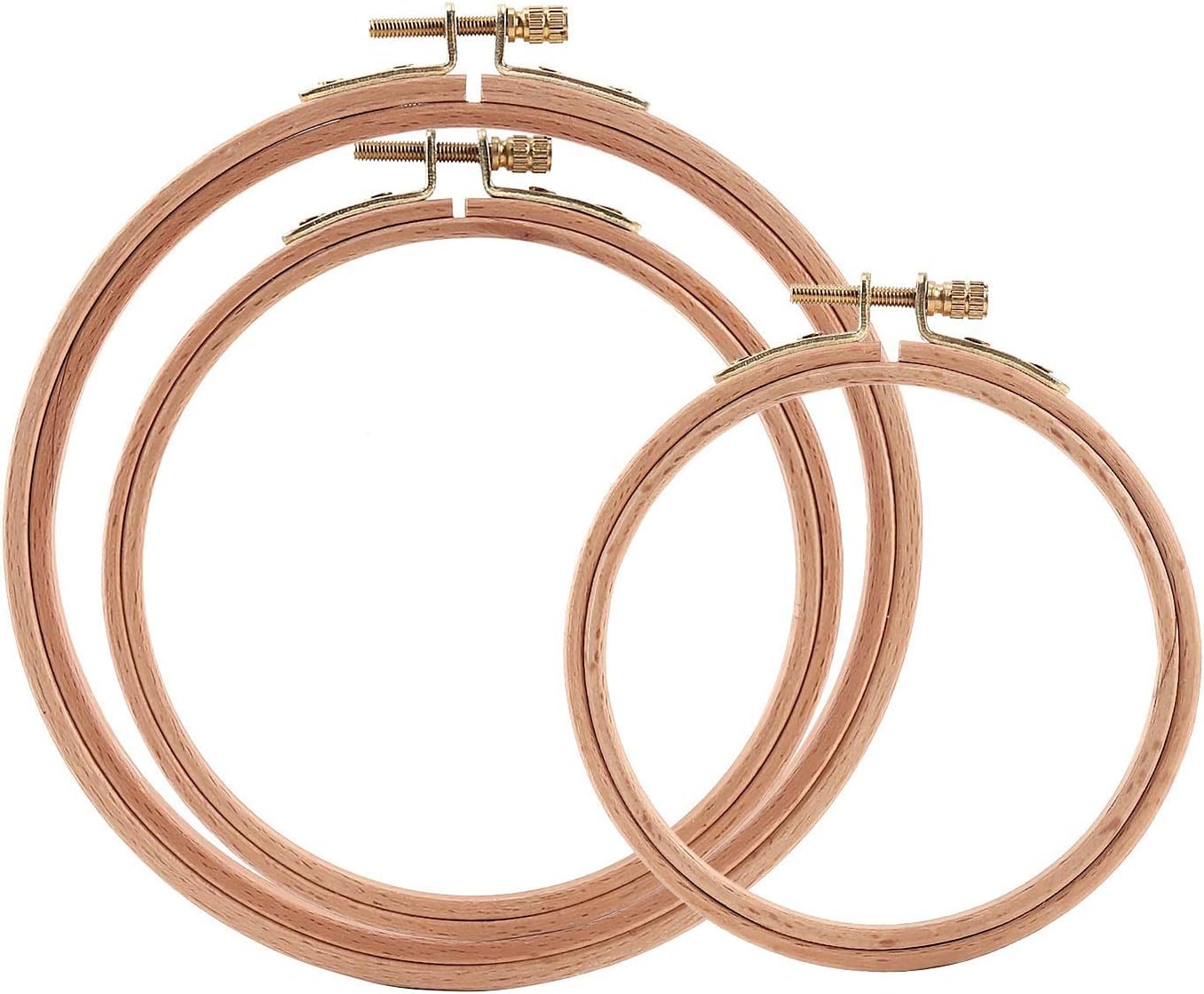
What size embroidery hoop is best for beginners?
Many beginners start with 4 inch, 5 inch, or 6 inch hoops for small projects. Larger 7 inch to 9 inch hoops are useful for bigger patterns or when using a stand.
Do beginners need an embroidery hoop stand?
Not always. A stand is most useful when a crafter wants both hands free, works on longer stitching sessions, or has trouble keeping the hoop steady.
How do I keep fabric tight in an embroidery hoop?
Place the fabric evenly over the inner hoop, press the outer hoop down, tighten gradually, and smooth the fabric edges until the surface feels firm. See the full guide on keeping fabric tight in an embroidery hoop.
Is beech wood good for embroidery hoops?
Beech wood is firm, smooth, and commonly used for embroidery hoops and craft tools. It also gives finished projects a natural display look. See wooden embroidery hoops vs plastic hoops.
What is the difference between an embroidery hoop and a cross stitch frame?
An embroidery hoop holds fabric in a round frame, while a cross stitch frame may use a larger rectangular or scroll-style structure. Hoops are simple, portable, and beginner-friendly.
Should finished embroidery stay in the hoop?
It can. Wooden hoops are often used as both stitching tools and display frames.
Related Sherbo Products
- Sherbo adjustable beechwood embroidery hoop stand
- Sherbo 3 inch beechwood embroidery hoops
- Sherbo 7/8/9 inch beechwood embroidery hoops
Sherbo 4, 5, and 6 inch beechwood embroidery hoops for smaller projects.
For a size-by-size project match, see the beginner embroidery hoop size guide.